

A flag without context
Unusual tool call detected
- No owner, so it lands in a queue
- No baseline, so nobody knows if it is unusual
- No cause, so there is nothing to fix
Behavioral Understanding & Risk Intelligence
Geordie observes an agent's context, its configuration and every tool call it makes – not just what crosses a gateway. That is what turns a signal into something worth acting on.









And dozens more
By the time a request crosses a boundary, the decision has already been made. Geordie is present for the decision.
What the agent was told and remembers
Instructions, skills and permissions in force
The steps it intends to take
The action, with its arguments
What came back and what it changed
Geordie classifies each agent's risk from what it is configured to do and what it has been observed doing, incorporating external vulnerability intelligence to give you an accurate view of both operational and compliance risk.
Findings are automatically mapped to international security and AI standards such as OWASP, NIST, ISO 42001, the EU AI Act, and AIUC-1, so you always know where your agentic operations stand against the policies and regulatory expectations you are accountable to.
Agents accessing systems or permissions beyond what's needed. Protects from privilege escalation, unauthorized access, and compliance violations.
Agents running unprotected or unscoped code. Protects from malware, backdoors, and agents being used to run attacker scripts.
Unsafe agent configurations and exposed services. Protects from shadow IT, bypassed security controls, and persistent attack surfaces.
Destructive commands and irreversible actions. Protects from data loss, service outages, and offensive operations.
Agents processing sensitive data or surfacing information. Protects from regulatory penalties, IP theft, and data breaches.
Agents with transaction or spending authority. Protects from unauthorized transactions, fraud, and uncontrolled spending.
Sessions can be rewritten or deleted, and the log lives inside the system it is meant to hold to account. Security teams need a record that survives the thing it describes.
| Requirement | Native session logs | Geordie |
|---|---|---|
| Cannot be altered after the fact | Sessions can be edited or cleared | Immutable once written |
| Held outside the agent | Stored by the harness it records | Independent of the agent and its user |
| Complete across the estate | One format per platform, stitched by hand | One schema across every harness |
| Covers reasoning, not just calls | Varies; often output only | Prompt, plan, response and invocation |
| Ready for an examiner | Retention at the vendor's discretion | Exportable to your SIEM and your auditors |
Tool calls, data reaches and escalations as they happen, with full history. When a review starts with "what actually happened", the answer is one page away.
claims-triage · session 8f2c
19 eventsGeordie builds each agent's own behavioral baseline, then measures every session against it.
Tool use, last 14 sessions
Per agent, not per fleet
A research agent's normal is not a payments agent's normal.
Behavioral, not signature-based
New attack patterns do not need a known signature to look wrong.
Continuous, not scheduled
The baseline moves as legitimate behavior evolves.
Geordie finds agent risk and gives teams enough to close the loop.
A flag without context
Unusual tool call detected
A finding you can act on
claims-triage invoked payments.adjust for the first time
Remediation is where this leads – Beam applies the control inside the same execution loop the finding came from, with responses that escalate with risk, from Monitor to Enforce.
Explore BeamThe agent's plan starts citing an instruction nobody reviewed, and its tool use widens the same day.
An agent scoped to read starts writing, one step at a time, over several weeks.
Customer records read by an agent whose brief never mentioned them, then summarized outward.
The same plan step repeating for hours, consuming tokens and producing nothing.
One workflow fanning out into a dozen delegated agents, each with its own reach.
Instructions arriving from content the agent read, then showing up in its plan.
The visibility Geordie gives me helps me articulate the return of control, the reduction of risk, and how well we're managing AI adoption.
“We're seeing the iceberg that rocked the Titanic — weeks in advance rather than the moment it appears on screen. We're able to take a snapshot of the entire ecosystem and have adult, grown-up conversations about what's responsible and what's not. We can quantify everything now.”


“My leadership team approved these tools because I could show them with Geordie what the agents were doing. Not what the model was doing. Not what the network was logging. What the agent was actually doing, step by step, on their behalf. That's the view that matters.”

“We've got Geordie deployed across at least 90% of our tech ecosystem now, and the visibility it gives me helps me articulate the return of control, the reduction of risk, and how well we're managing AI adoption.”
“Agentic AI technologies will enable the most significant delegation of data analysis, decision making and execution privileges ever seen. Coupled with the rapid adoption of MCP integrations, agentic AI is already a top risk for many companies. For us, Geordie gives us oversight & visibility - the first layer in any effective cyber defence.”

“We've been rolling out agentic AI across the business for a while now, and the governance question kept coming up: what's actually running, what can it do, and what happens if something goes wrong? Geordie is helping us solve these problems. It's given us real peace of mind, and they're improving their product every week. Geordie should be on every company's shortlist for agentic AI discovery and governance.”

“One of the key challenges for us was how to secure agentic AI in a practical and scalable way. Geordie's endpoint-based approach stood out because it gave us visibility close to where agent activity happens, without forcing us into a more complex gateway-based model. It gave us the balance of visibility, governance, and architectural simplicity.”

“We're seeing the iceberg that rocked the Titanic — weeks in advance rather than the moment it appears on screen. We're able to take a snapshot of the entire ecosystem and have adult, grown-up conversations about what's responsible and what's not. We can quantify everything now.”
“My leadership team approved these tools because I could show them with Geordie what the agents were doing. Not what the model was doing. Not what the network was logging. What the agent was actually doing, step by step, on their behalf. That's the view that matters.”
“We've got Geordie deployed across at least 90% of our tech ecosystem now, and the visibility it gives me helps me articulate the return of control, the reduction of risk, and how well we're managing AI adoption.”
“Agentic AI technologies will enable the most significant delegation of data analysis, decision making and execution privileges ever seen. Coupled with the rapid adoption of MCP integrations, agentic AI is already a top risk for many companies. For us, Geordie gives us oversight & visibility - the first layer in any effective cyber defence.”
“We've been rolling out agentic AI across the business for a while now, and the governance question kept coming up: what's actually running, what can it do, and what happens if something goes wrong? Geordie is helping us solve these problems. It's given us real peace of mind, and they're improving their product every week. Geordie should be on every company's shortlist for agentic AI discovery and governance.”
“One of the key challenges for us was how to secure agentic AI in a practical and scalable way. Geordie's endpoint-based approach stood out because it gave us visibility close to where agent activity happens, without forcing us into a more complex gateway-based model. It gave us the balance of visibility, governance, and architectural simplicity.”
“We're seeing the iceberg that rocked the Titanic — weeks in advance rather than the moment it appears on screen. We're able to take a snapshot of the entire ecosystem and have adult, grown-up conversations about what's responsible and what's not. We can quantify everything now.”
“My leadership team approved these tools because I could show them with Geordie what the agents were doing. Not what the model was doing. Not what the network was logging. What the agent was actually doing, step by step, on their behalf. That's the view that matters.”
“We've got Geordie deployed across at least 90% of our tech ecosystem now, and the visibility it gives me helps me articulate the return of control, the reduction of risk, and how well we're managing AI adoption.”
“Agentic AI technologies will enable the most significant delegation of data analysis, decision making and execution privileges ever seen. Coupled with the rapid adoption of MCP integrations, agentic AI is already a top risk for many companies. For us, Geordie gives us oversight & visibility - the first layer in any effective cyber defence.”
“We've been rolling out agentic AI across the business for a while now, and the governance question kept coming up: what's actually running, what can it do, and what happens if something goes wrong? Geordie is helping us solve these problems. It's given us real peace of mind, and they're improving their product every week. Geordie should be on every company's shortlist for agentic AI discovery and governance.”
“One of the key challenges for us was how to secure agentic AI in a practical and scalable way. Geordie's endpoint-based approach stood out because it gave us visibility close to where agent activity happens, without forcing us into a more complex gateway-based model. It gave us the balance of visibility, governance, and architectural simplicity.”
“We've been rolling out agentic AI across the business for a while now, and the governance question kept coming up: what's actually running, what can it do, and what happens if something goes wrong? Geordie is helping us solve these problems. It's given us real peace of mind, and they're improving their product every week. Geordie should be on every company's shortlist for agentic AI discovery and governance.”
Connect one platform and we will show you a real session end to end – prompt, plan, tool calls, response – with the baseline it sits against.
See how we handle your data in our Trust Center (opens in a new tab)
Your request has been received.
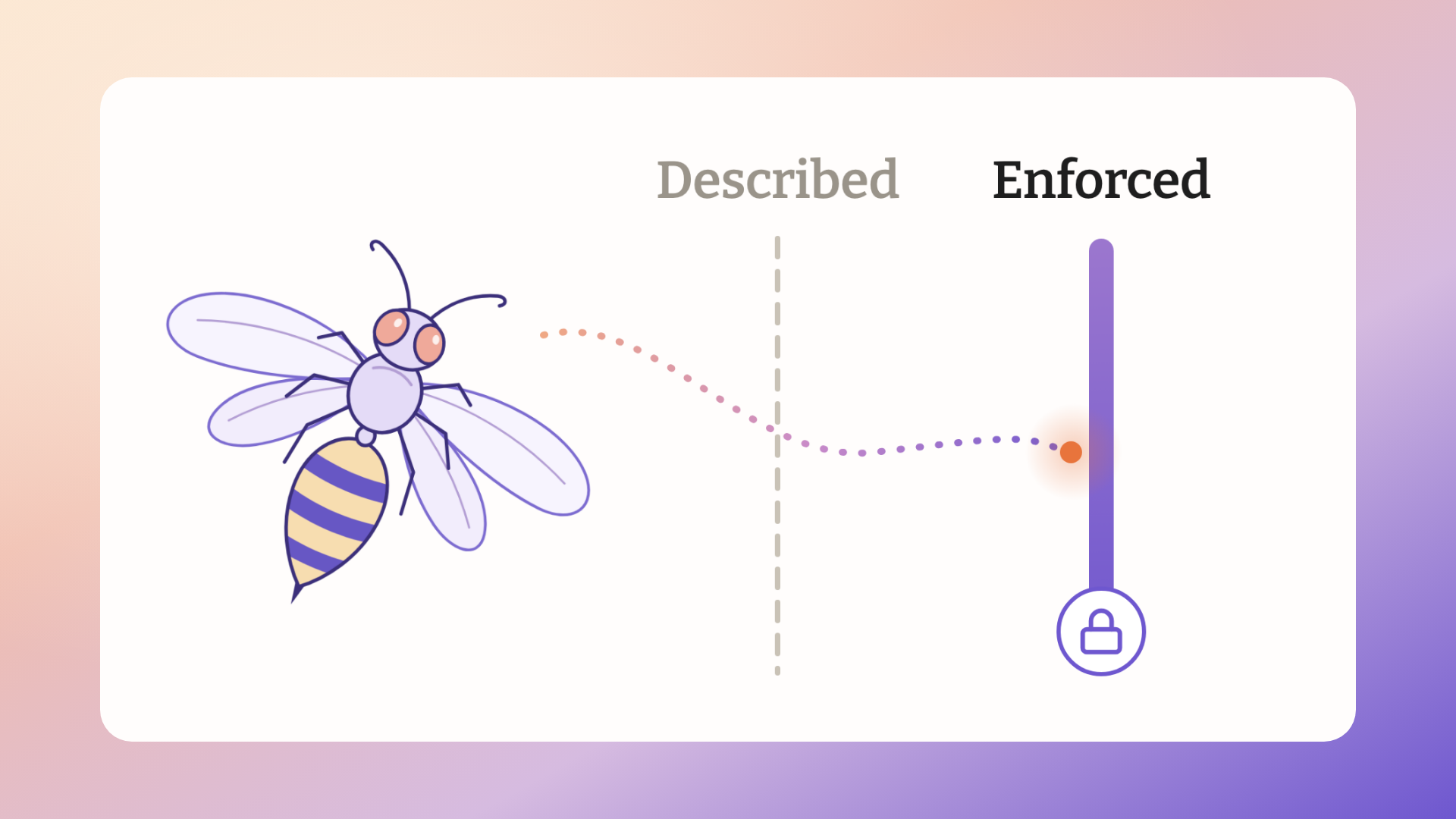
OWASP’s Q3 exploit roundup says prompt-level instructions alone do not establish a secure boundary.

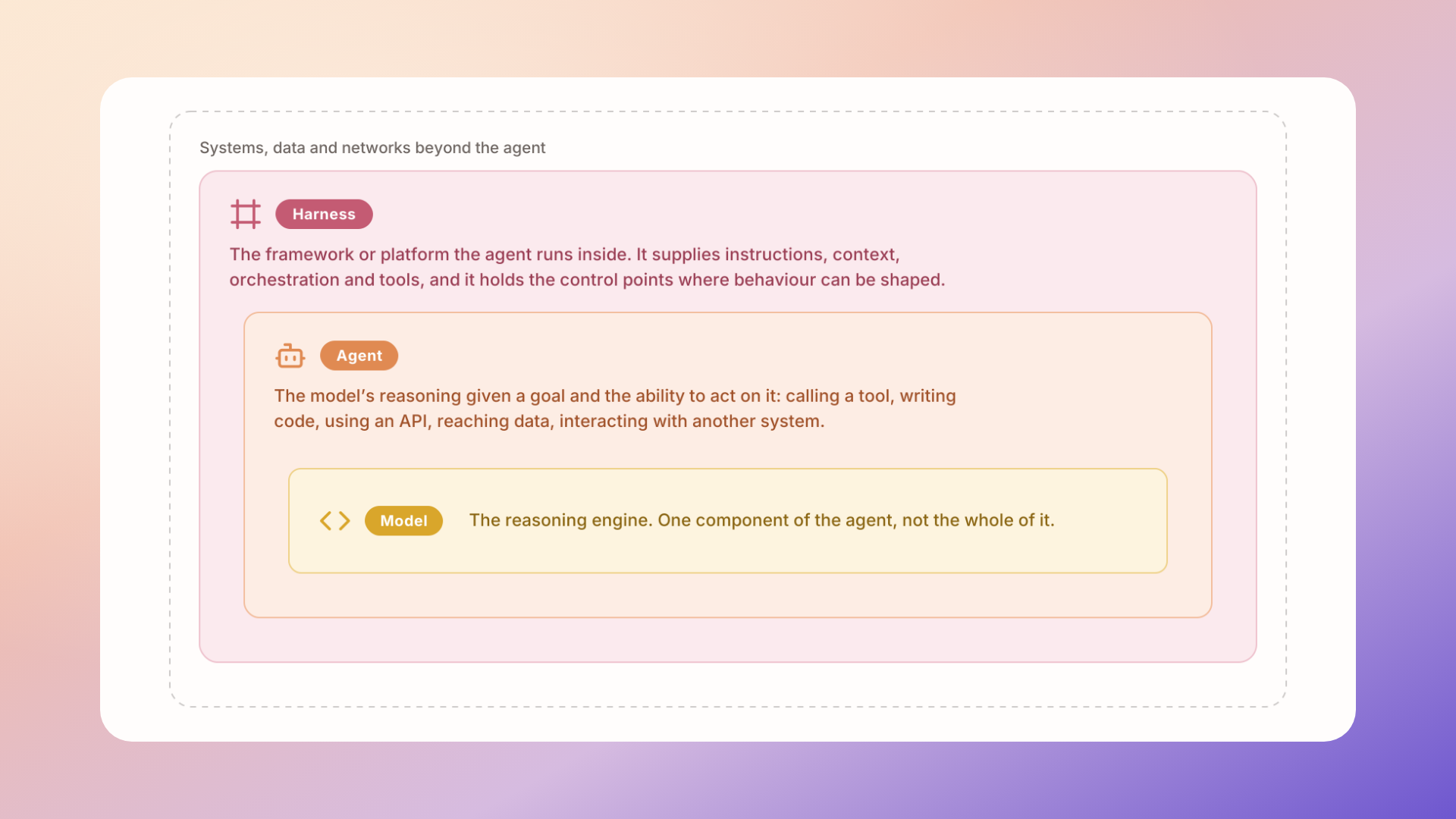
Model capability is one input to what an agent does.
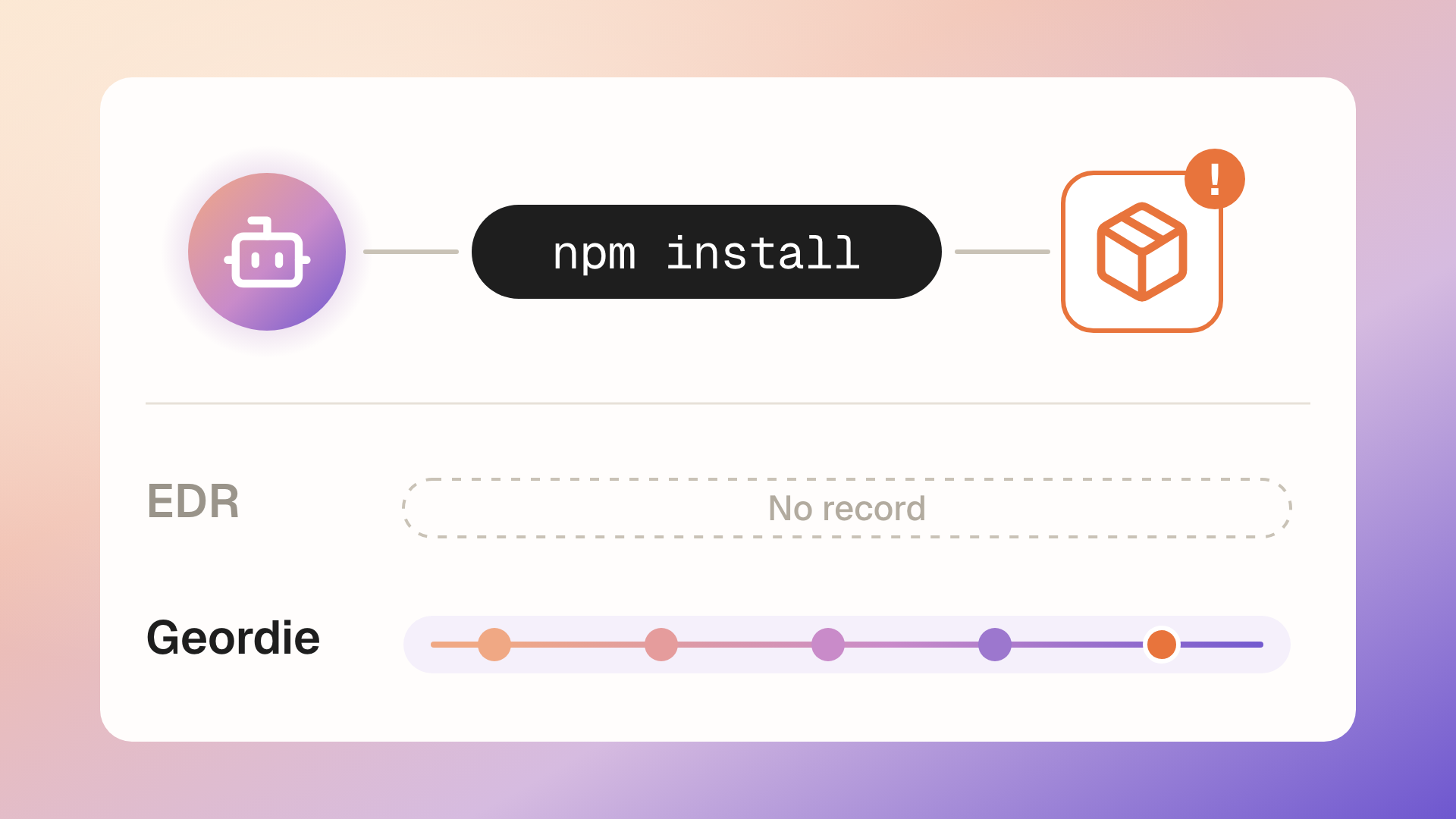
Their EDR had no record of the activity.