


Security
What sensitive data can this agent reach, which tools and credentials does it hold, what happens when it connects to a malicious skill?
Cost Intelligence
Map agent spend back to the agents, activities and workflows that generated it – so the question stops being "how much are we spending on AI?" and becomes "is this spend doing useful work?"
Real-time attribution · No agent code changes · Same record as your security data









And dozens more
In summer 2026, two things happened at once. AI provider pricing shifted, and the workforce found their stride with agents – long coding sessions, research agents left to grind overnight, workflows that quietly fan out into a dozen sub-agents.
Promotional credits kept the cost line flat while consumption climbed underneath, and native dashboards report totals, not attribution. The first accurate picture of demand arrived as an invoice.
What sensitive data can this agent reach, which tools and credentials does it hold, what happens when it connects to a malicious skill?
Where might an agent take an action that breaks a process, corrupts a system of record, or brings a workflow to a halt?
What is this agent consuming, is the work worth it, and who is accountable for the number? Can we spot wasteful agents and identify effective ones?
Conventional telemetry describes consumption – which models ran, how many tokens they used, what that came to. Every one of those facts is about how AI was used up. None is about what AI produced.
Record one · consumption
On its own: a line item to be defended.
Record two · production
Together: a data point in an investment decision.
Scattered platform invoices, no agent-level view
Anthropic monthly invoice
GitHub Copilot admin
+ Foundry, HubSpot Breeze, Codex…
Each with its own dashboard
Leads to simplistic, unproductive conclusions: 'We need to cut the highest spenders'
Agent-level spend + behavioral context, all platforms
Model mix
Opus on trivial tasks
Help desk: switch to Haiku
Cache efficiency
38% utilization
Onboarding reloads context
Task pattern
Repeated prompts
Could automate system-to-system
Spend anomaly
Loop detected
Onboarding agent stuck 4h
Actionable conclusions. In this case: 'code review and QA triage agents are delivering strong value for what they cost. Cut help desk's model tier. Fix onboarding's caching. Automate ops alerts entirely.'
Knowing that Agent 47 cost $12,000 last month tells you almost nothing. The agent might be the most valuable system in the company, or it might have been looping since a bad deploy on the 3rd.

All of it built from agent activity, not estimated from invoices.
Drill from an organization-wide total down through platform, team, user, model, agent or workflow.
AI spend from every connected platform in one view, attributed to the agents and the work that generated it – not only the activity that happens to route through a single gateway or model router.
Spend and volume mapped per agent, so the high-value workhorse and the runaway loop are distinguishable at a glance.
Per-agent caching efficiency as a first-class metric, flagging which agents are under-caching and what that costs.
31% hit rate · $14k/mo recoverable
Infinite tool loops, oversized model routing and sessions burning tokens with little output – surfaced by the same behavioral engine that identifies security risk.
| Agent | Owner | Outcome | Spend | Per unit |
|---|---|---|---|---|
| pr-review-agent | Payments platform | 412 PRs merged | $96,410 | $234 |
| claims-triage | Claims ops | 18,240 adjudicated | $74,880 | $4.10 |
| market-research | Strategy | Loop · no output | $55,120 | – |
| doc-summarizer | Legal | 9,110 reviewed | $35,640 | $3.91 |
"Expensive" and "wasteful" stop being synonyms once the third column exists.
Connect one platform and we will show you where your agent spend is going, what it produced, and which agents are quietly the largest consumers in your organization.
Your request has been received.
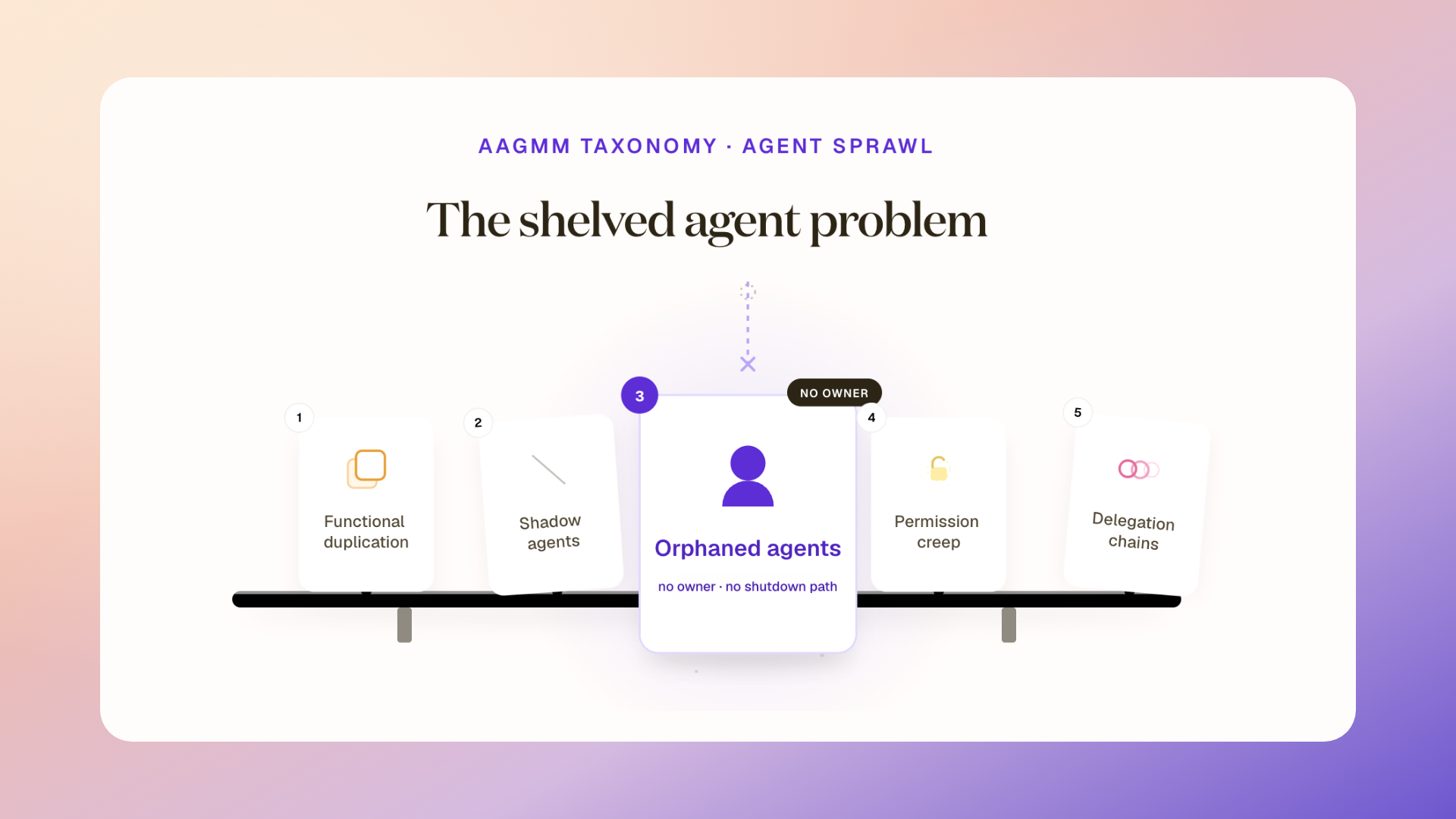
When enterprises iterate on their agent workflows, older agents rarely get decommissioned.
What 50+ organizations running agents in production told us about agent spend, who owns it, why the bill doesn't explain itself, and what to do instead of freezing.
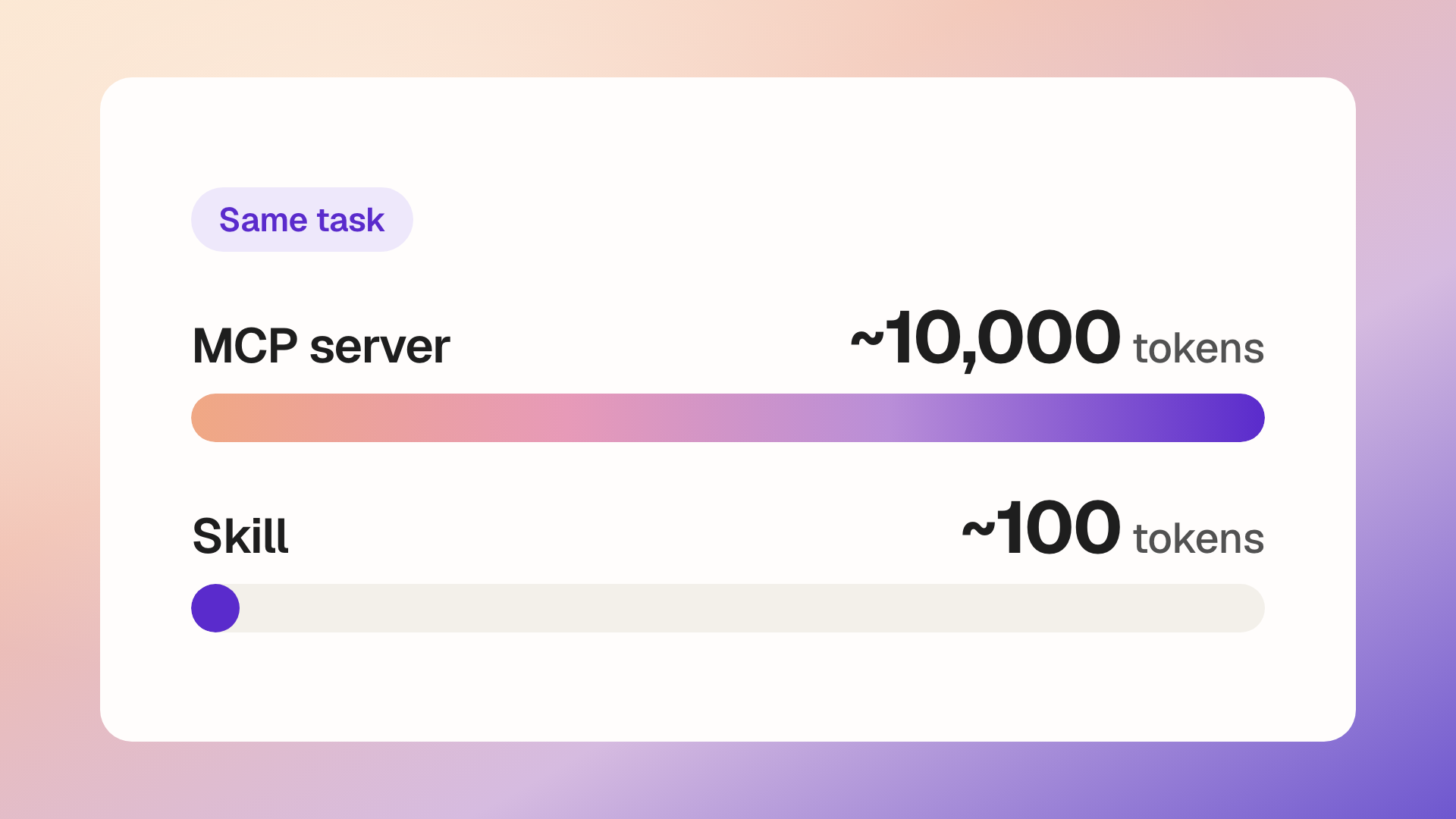
The same agent capability can cost ~10,000 tokens as an MCP server or ~100 as a skill.